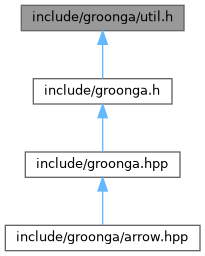
Go to the source code of this file.
Functions | |
| GRN_API grn_obj * | grn_inspect (grn_ctx *ctx, grn_obj *buffer, grn_obj *obj) |
| Inspect specified object and produce a textual representation. | |
| GRN_API grn_obj * | grn_inspect_indent (grn_ctx *ctx, grn_obj *buffer, grn_obj *content, const char *indent) |
| GRN_API grn_obj * | grn_inspect_indented (grn_ctx *ctx, grn_obj *buffer, grn_obj *obj, const char *indent) |
| Inspect specified object and produce an indented textual representation. | |
| GRN_API grn_obj * | grn_inspect_limited (grn_ctx *ctx, grn_obj *buffer, grn_obj *obj) |
| Inspect specified object and produce a length-limited textual representation. | |
| GRN_API grn_obj * | grn_inspect_name (grn_ctx *ctx, grn_obj *buffer, grn_obj *obj) |
| Inspect specified object and return the name of the specified object. | |
| GRN_API grn_obj * | grn_inspect_encoding (grn_ctx *ctx, grn_obj *buffer, grn_encoding encoding) |
| Inspect the given encoding and produce its name. | |
| GRN_API grn_obj * | grn_inspect_type (grn_ctx *ctx, grn_obj *buffer, unsigned char type) |
| Inspect the given type and produce its name. | |
| GRN_API grn_obj * | grn_inspect_query_log_flags (grn_ctx *ctx, grn_obj *buffer, unsigned int flags) |
| Inspect the given query log flags and produce their names. | |
| GRN_API grn_obj * | grn_inspect_key (grn_ctx *ctx, grn_obj *buffer, grn_obj *table, const void *key, uint32_t key_size) |
| GRN_API void | grn_p (grn_ctx *ctx, grn_obj *obj) |
| Print inspected text of the given object. | |
| GRN_API void | grn_p_geo_point (grn_ctx *ctx, grn_geo_point *point) |
| Print inspected text of the given geo point. | |
| GRN_API void | grn_p_ii_values (grn_ctx *ctx, grn_obj *obj) |
| Print inspected text of the given index column values. | |
Function Documentation
◆ grn_inspect()
Inspect specified object and produce a textual representation.
- Note
- If
objis a GRN_TABLE_PAT_KEY table, all keys are shown. To limit output on GRN_TABLE_PAT_KEY tables, use grn_inspect_limited instead.
For example usage:
- Parameters
-
ctx The context object. buffer The buffer where the inspected text will be stored. obj The target object to inspect.
- Returns
- The inspected object in text.
◆ grn_inspect_encoding()
| GRN_API grn_obj * grn_inspect_encoding | ( | grn_ctx * | ctx, |
| grn_obj * | buffer, | ||
| grn_encoding | encoding | ||
| ) |
Inspect the given encoding and produce its name.
- Since
- 4.0.8
For example usage:
For example output: Depending on encoding, it will output one of the following lines:
- Parameters
-
ctx The context object. buffer The buffer where the encoding name will be stored. encoding The encoding to inspect. Must be one of:
- Returns
- The inspected object's encoding name in text.
◆ grn_inspect_indent()
| GRN_API grn_obj * grn_inspect_indent | ( | grn_ctx * | ctx, |
| grn_obj * | buffer, | ||
| grn_obj * | content, | ||
| const char * | indent | ||
| ) |
◆ grn_inspect_indented()
| GRN_API grn_obj * grn_inspect_indented | ( | grn_ctx * | ctx, |
| grn_obj * | buffer, | ||
| grn_obj * | obj, | ||
| const char * | indent | ||
| ) |
Inspect specified object and produce an indented textual representation.
- Since
- 4.0.8
This function combines grn_inspect and grn_inspect_indent. It first inspects the given obj into a temporary buffer, then prepends the given indent string to each line of that inspected text and stores the result in buffer.
- Note
- The
indentstring is only applied when the inspected text contains one or more newline characters (when the output spans multiple lines).
For example usage:
If obj is GRN_TABLE_PAT_KEY table, it prints like the following.
- Parameters
-
ctx The context object. buffer The buffer where the indented inspected text will be stored. obj The target object to inspect. indent The indentation string to prepend to each line of output.
- Returns
- The indented inspected object in text.
◆ grn_inspect_key()
| GRN_API grn_obj * grn_inspect_key | ( | grn_ctx * | ctx, |
| grn_obj * | buffer, | ||
| grn_obj * | table, | ||
| const void * | key, | ||
| uint32_t | key_size | ||
| ) |
◆ grn_inspect_limited()
Inspect specified object and produce a length-limited textual representation.
- Since
- 7.0.0
This function inspects obj into buffer, but if the full representation exceeds half of GRN_CTX_MSGSIZE, the output is truncated to that length, and "...(original length)" is appended to indicate the total size.
- Note
- If the inspected text length is greater than
GRN_CTX_MSGSIZE/2, it will be truncated otherwise it is copied in full.
For example usage:
If obj is GRN_TABLE_PAT_KEY table, it prints truncated result as follows.
- Parameters
-
ctx The context object. buffer The buffer where the truncated inspected text will be stored. obj The target object to inspect.
- Returns
- The truncated inspected object in text.
◆ grn_inspect_name()
Inspect specified object and return the name of the specified object.
This function inspects the given obj and writes its name into buffer. If obj has a name, that name is copied into buffer. Otherwise:
- If
obj'sID is a GRN_ID_NIL, the(nil)is stored inbuffer. - If
objexists but has no name, the(anonymous:ID)is stored.
For example usage:
For example output: Depending on obj, it will output one of the following lines:
- Parameters
-
ctx The context object. buffer The buffer where the inspected name will be stored. obj The target object whose name is to be inspected.
- Returns
- The inspected object's name in text.
◆ grn_inspect_query_log_flags()
| GRN_API grn_obj * grn_inspect_query_log_flags | ( | grn_ctx * | ctx, |
| grn_obj * | buffer, | ||
| unsigned int | flags | ||
| ) |
Inspect the given query log flags and produce their names.
- Since
- 7.0.4
For example usage:
For example output: Depending on flags, it will output one of the following:
When multiple flags are set, they are displayed separated by "|".
Available flags:
- GRN_QUERY_LOG_NONE
- GRN_QUERY_LOG_CACHE
- GRN_QUERY_LOG_COMMAND
- GRN_QUERY_LOG_DESTINATION
- GRN_QUERY_LOG_RESULT_CODE
- GRN_QUERY_LOG_SCORE
- GRN_QUERY_LOG_SIZE
- Parameters
-
ctx The context object. buffer The buffer where the flag names will be stored. flags The query log flags to inspect.
- Returns
- The names of the inspected query log flags as text.
◆ grn_inspect_type()
Inspect the given type and produce its name.
- Since
- 4.0.8
For example usage:
For example output: Depending on type, it will output one of the following lines:
Table types:
Column types:
Data container types:
Cursor types:
Other object types:
Unknown types:
Where 0x42 is an example of the hexadecimal value for unknown types.
- Parameters
-
ctx The context object. buffer The buffer where the type name will be stored. type The type to inspect. This is typically obtained from an grn_obj_header::type.
- Returns
- The inspected object's type name in text.
◆ grn_p()
Print inspected text of the given object.
- Since
- 4.0.8
For example usage:
If obj is a ShortText type, it prints output like:
- Parameters
-
ctx The context object. obj The object to inspect and print.
◆ grn_p_geo_point()
| GRN_API void grn_p_geo_point | ( | grn_ctx * | ctx, |
| grn_geo_point * | point | ||
| ) |
Print inspected text of the given geo point.
- Since
- 4.0.8
This function inspects the given point and prints the result directly to stdout. It internally creates a WGS84 geo point object from the provided grn_geo_point structure and prints its inspected representation.
For example usage:
If point indicates New York City, it prints output like:
- Parameters
-
ctx The context object. point The geo point to inspect and print.
◆ grn_p_ii_values()
Print inspected text of the given index column values.
- Since
- 4.0.8
For example usage:
If obj is an index column, it prints output like:
- Parameters
-
ctx The context object. obj The index column to inspect and print.